Summary for curtains
- The way the curtain is oriented isn't just for show: the more stylish side faces the room, while the lining or technical side handles the rest, on the window side.
- Precision in installation, choice of curtain rods, fabric density—none of this is a mere detail: here, interior design is a constant process of fine-tuning, almost a living art form.
- The harmony of fabric, color, and light—that alchemy that brightens up gray days—is just waiting to be embraced… if routine threatens to set in, breaking the rules is a must.
Where to start? It seems so simple—just a wave of the decor wand, and presto, the curtains are up. Yet, those seeking that elusive balance between cozy comfort and stylish ambiance know the drill: there’s the fabric selection, the agonizing moment faced with dozens of colors… and then, suddenly, the nagging question: but which way should these custom thermal curtains be hung?
Why does their orientation make such a difference—from thermal comfort to the warm, golden light streaming into the living room, right down to the feeling of being in an acoustic bubble when the city roars outside? Well, the very idea of investing in custom thermal curtains is bound to appeal to discerning minds. And that’s a good thing! Because the purpose of blackout and soundproof curtains is anything but trivial.
Meaning: It’s about decor, but not just that… Shall we talk about it?
There’s a story that often comes up at dinner parties among design enthusiasts: that gorgeous curtain, chosen to perfection, but whose “upside-down” installation was enough to ruin its wow factor. In short, you don’t mess around with the visible side! Whether it’s an irresistible pattern or a beautifully crafted fabric, the most stylish part should face the room, as if it were saying good morning every day.
And what about the lining? It does its job against the window, patiently, like a discreet guardian. Let’s step into the wonderful world of the thermal curtain, a champion not only in winter but also for comfort during heat waves. The legend is true: placing the metallic side—the one that reflects heat—against the window creates a true invisible barrier, protecting against both the biting cold of early morning and the heat that dances at midday. Who decided that decor and thermal efficiency had to be at odds? Certainly not those who opted for dual performance, without forgetting aesthetics (chic and technical—no one said it had to be dull).
Et côté occultant, alors ? Là encore, rien ne se joue au hasard : la surface sombre ou profilée, véritable guerrière de l’ombre, va vers la vitre. Dedans, l’univers se décline en douceur, motifs ou teintes travaillées. L’élégance rencontre le confort acoustique et la maîtrise de la luminosité. Qui aurait cru que cette simple décision pouvait métamorphoser l’atmosphère d’une pièce ?
| Curtain type | Window side | Heads side | Expected benefits |
|---|---|---|---|
| Classic | Back | Pattern / Decorative fabric | Optimal interior design |
| Thermal | Metallic finish or lining | Solid-color or patterned fabric | Enhanced insulation (heating/cooling) |
| Occultant | Flat side or contoured side | Smooth/decorative side | Lighting control, privacy |
So, is it all just about a few degrees more or less? No, of course not. It’s also a chance to enhance the atmosphere and treat yourself to… a “home” that comes alive with every season.
Preparing to hang curtains: the real secret to a successful result
Even before you pick up the drill, who hasn’t had that sudden worry: will we have enough fabric? Are we at risk of that infamous “short skirt curtain” effect? To avoid any decorating disasters, grab the tape measure, measure, and measure again.
Ceiling height, window width—nothing should be overlooked. Anyone who’s ever heard the comment “That looks a little off, doesn’t it?” knows that the secret lies in precision and… adapting to the space. And what about the curtain rod? That’s a whole other story. Ask those who swear by the discreet track, or those for whom the extendable rod saved their walls from damage. The weight of the curtain—whether heavy, thermal, or lightweight—must be accounted for: there’s no question of the system sagging right before dinner. Some spaces require ingenuity, with impossible angles or majestic windows.
That’s where we appreciate the ingenuity of manufacturers (and a few tips picked up over the years). A well-designed system is a curtain that slides smoothly, is easy to operate, lasts a long time, and is easy to maintain. That’s enough to make a difference in your daily life, isn’t it?
| Rail system | Recommended use | Benefits | Common Mistakes |
|---|---|---|---|
| Straight rod | Standard windows | Quick installation, wide selection | The height isn't right; the curtains are too short |
| Rail | Floor-to-ceiling windows, large openings | Glides smoothly, discreet | Misalignment, imperfect overlap |
| Extendable rod | Windows of varying widths | Flexibility, no drilling required | Improper installation, risk of sagging |
Just a small detail? But it’s often those little choices that make all the difference, isn’t it?

Decorating tips that make all the difference!
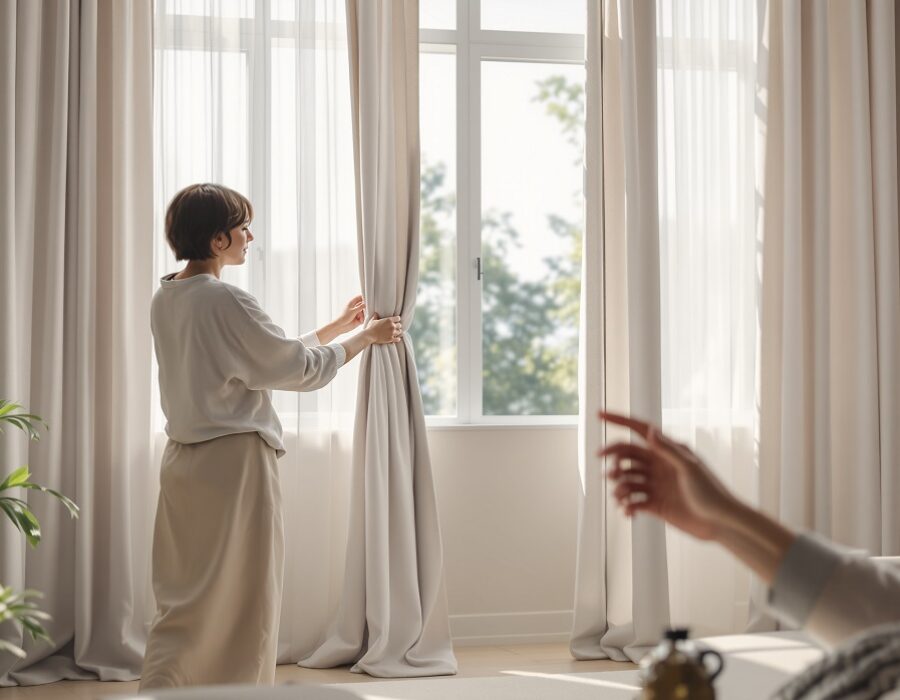
Before you celebrate your success and admire the results, it never hurts to take a couple of minutes to think about the perfect combination of color, fabric, and light. Why not try cocoon-style velvet, linen for summer, or that mix of ecru and vibrant colors that really brings the whole space to life? Pairing a curtain with good thermal insulation and a light, airy sheer is the perfect way to play with the light or block it out.
Those who live in south-facing homes know this all too well: pairing heavy curtains with sheer curtains makes all the difference in comfort. Thermal curtains in rich, deep tones instantly enhance the ambiance.
- Combining blackout curtains and sheers: a masterful play of light
- Choose sturdy materials and rods for each application
- Choose colors based on the room's orientation
The fashion world also loves to break the rules—so why hold back? Whether it’s industrial style, minimalist Scandinavian design, or unexpected combinations, the insights of those who experiment, reinterpret, and dare to blend technical materials with fine fabrics are always worth their weight in gold: that technical touch is the signature that tells the story of an interior.
How can you check the installation to avoid a last-minute mistake?
Once the curtain is hung, if there’s one piece of advice to share, it’s this ritual of checking everything over. Aligning it, adjusting it, checking the drape, making sure the right side is facing the room… All of this makes the difference between a sloppy look and the feeling that the house has suddenly been infused with a touch of magic. What if things go wrong?
Straighten the rod, slide the fabric into place, adjust the fit, and before you know it, the sound barrier is in place. Who hasn’t had to fix a rushed installation while listening to a tutorial in the background or rereading a message from a friend who claims to have the “miracle trick”? We have to admit it: sometimes, it’s that spirit of mutual support that saves the decor. By sharing experiences, we give ourselves the chance to co-create the most beautiful of atmospheres and tap into a true collective energy. Isn’t that the whole joy of living and decorating?
Le regard Cotton Silence, exigence acoustique et style : que cherchent vraiment les utilisateurs ?
Those who demand the very best—who want silence, warmth, and coolness all at once, and who never compromise on visual comfort—know exactly what they’re looking for. And they’re looking for more than just a curtain; they’re looking for much more than a simple accessory.
Les équipes Cotton Silence racontent mille anecdotes : des open-spaces où la performance acoustique a sauvé la créativité, des chambres baignées de calme grâce à une pose précise, des studios où chaque détail technique a amplifié l’esthétique. La question du sens des couches, du choix de la tringle, du mélange tissus techniques et élégance, ça ne se devine pas, ça se cultive. La mission de Cotton Silence, c’est le confort authentique, des rideaux conçus pour la vie, pas seulement pour la vitrine.
In fact, at the heart of this reflection lies one certainty: good sense, the right fabric, the right direction… all of this is reinvented every day in response to needs, seasons, and desires. What if, tonight, true luxury meant daring to embrace detail, color, and meticulous craftsmanship? Just to give each room that extra touch of soul and… tranquility.
More information on which way to hang curtains
Which way does a curtain hang?
On one side is the room, on the other the window. The question of curtain orientation is much more than just a detail. With a classic curtain, the decorative fabric faces inward. It seems simple, but sometimes all it takes is a closer look to see that the subtlety of the pattern invites its colors into the living room rather than out onto the street. Turn a curtain inside out? The effect flips too: the lining takes center stage, facing the room, while the fabric becomes a bit less glamorous. For the best look, it’s the richness of the fabric—its textures and patterns—that dictates which way it should face. Inside out, everything fades a bit.
How do you hang curtains on windows?
Hanging curtains means giving yourself the freedom to transform the light and set the mood. Mounting system? Two small brackets, 20 cm on each side, as if the window needed a little more breathing room. The rod brackets, meanwhile, are set back 10 cm from the sill, so the whole setup doesn’t block the view or the light. Even better: allow a good 15 centimeters above the frame to add height and flair, and prevent the curtains from getting caught when opening the window. Installation, at its core, is a balancing act: the width of the window, plus a little extra room, to dress the space without ever making it feel cramped.
Which side should the curtain be hung on?
The big morning debate: Which way should the reflective side of the thermal curtain face? The answer: always, without fail, toward the window. That’s where the magic happens. This special side acts as a shield, blocking out the cold or heat before it enters the room. The other side, made of soft fabric, faces the room so you don’t feel like you’re living in a bunker. Hanging the curtain the right way isn’t just a “theoretical” issue—it affects how well it insulates. If you overlook this detail, you’ll sacrifice its thermal superpowers for the sake of aesthetics.
Do the curtains have to touch the floor?
Decorating dilemma: curtains that just graze the floor or float, or stop well short? The current trend favors long drapes that barely touch the floor. Just “skimming” the surface, without sweeping up dust. It’s essential to measure from the top of the window to the floor—sometimes even twice—to make sure you get it right. Curtains that are too short take the breath away from the room; too long, and hello to knots and dirty corners. You have to find the right length, where even the light seems to approve. Curtains and their size—it’s all about balance and elegance.