Imaginez… Vous arrivez le matin, motivé, prêt à abattre du travail. Mais sitôt installé, votre concentration est bombardée par la sonnerie d’un téléphone à l’autre bout de l’open space, sur fond de discussions à haute voix et de claquements de portes réguliers. Ah, le doux vacarme des bureaux modernes, véritable fléau de la productivité. Alors, comment transformer ce tumulte quotidien en un environnement propice à la réflexion, sans devoir casser les murs ni déranger le service technique pendant des semaines ? Il existe en réalité des solutions insoupçonnées et drôlement efficaces pour maîtriser le bruit, redonner à votre cerveau un peu d’oxygène et insuffler un vent nouveau à votre dynamique au travail, le tout sans engager de gros travaux. C’est le moment d’entrer dans le monde de l’isolation phonique maline et design !
The issue of noise in the workplace
The acoustic environment in open-plan and closed-door offices
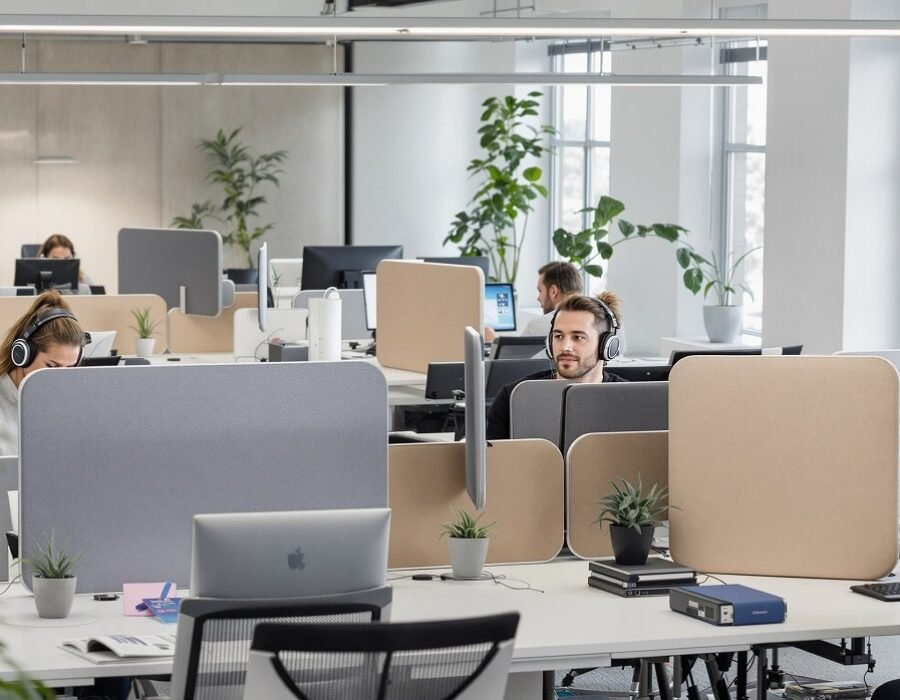
The design of workspaces has changed radically in recent years. On the one hand, open-plan offices facilitate communication but create a constant hubbub: the clatter of keyboards, ringing phones, impromptu conversations, and the whirring of printers all blend into a cacophony that’s hard to ignore. In contrast, closed-door offices offer more privacy but are often plagued by unpleasant reverberation, where even the quietest conversation echoes. In both cases, the acoustic environment shapes employees’ workdays to such an extent that even the slightest acoustic treatment or carefully designed furniture makes the difference between a noisy space and a haven of peace. This reality, evident in every company, calls for concrete solutions to preserve teams’ mental health, well-being, and performance.
The Effects of Noise on Concentration and Productivity
Qui n’a jamais perdu le fil d’une idée brillante à cause d’un éclat de voix ou d’une alarme intempestive ? Le bruit en entreprise, loin d’être anodin, impacte directement la capacité de concentration, la créativité et la vitesse d’exécution. Une gêne sonore continue fait grimper le niveau de stress, détourne l’attention et épuise plus vite qu’on ne l’imagine. Les études le confirment : une diminution effective du bruit ambiant de seulement 5 dB se traduit par une hausse tangible de la productivité. Voilà pourquoi privilégier l’isolation phonique intelligente devrait figurer parmi les priorités de tout aménagement d’espace professionnel.
Les solutions douces pour une isolation phonique sans travaux
Everyday materials and objects with acoustic properties
Fortunately, you don’t need to renovate everything to limit sound transmission! Adding a few well-chosen items can already make a big difference. Materials like cork, wool, and felt absorb vibrations without weighing down the decor. A double-layered wall hanging, foam panels, or thick desk pads are your discreet allies for dampening echoes. Even a simple shelf filled with files or books acts as a barrier to sound waves—a simple trick, but one that’s incredibly effective for creating a more peaceful atmosphere. The key is to strategically place these items throughout the space to naturally break up sound pathways.
Specialized equipment and design trends
If you appreciate both beauty and functionality, stylish acoustic solutions are THE perfect way to enhance your office. Decorative wall panels, thermal insulation curtains, upholstered movable partition heads, and colorful ceiling tiles are available in an endless variety of textures and colors. In addition to effectively absorbing noise, these solutions add a contemporary touch to the workspace. Without even trying, you’ll give your office a fresh new look while improving acoustic comfort. Choose specialized brands that combine technical performance with impeccable aesthetics—your team will thank you (and so will your ears)!
Comparison of Various Soundproofing Products
Face au foisonnement d’options sur le marché, il n’est pas toujours simple de s’y retrouver. Pour vous faciliter la vie, voici un tableau comparatif des principales solutions d’isolation phonique à installer soi-même, avec leurs points forts et limites. Il est temps de dompter les nuisances sonores sans prise de tête, et sans vider le porte-monnaie !
| Product type | Easy to install | Estimated cost | Efficiency (dB insulation) |
|---|---|---|---|
| Acoustic foam | Very easy (self-adhesive / clip-on) | € to €€ | 8 to 15 dB |
| Soft rug | Free-standing | € to €€ | 5 to 10 dB |
| Acoustic curtain | Easy (install the rod) | €€ | 10 to 20 dB |
| Movable partition | Moderately easy (self-supporting) | €€ to €€€ | 15 to 25 dB |
Strategic textile and furniture accessories
Curtains, rugs, and cushions with high absorbency
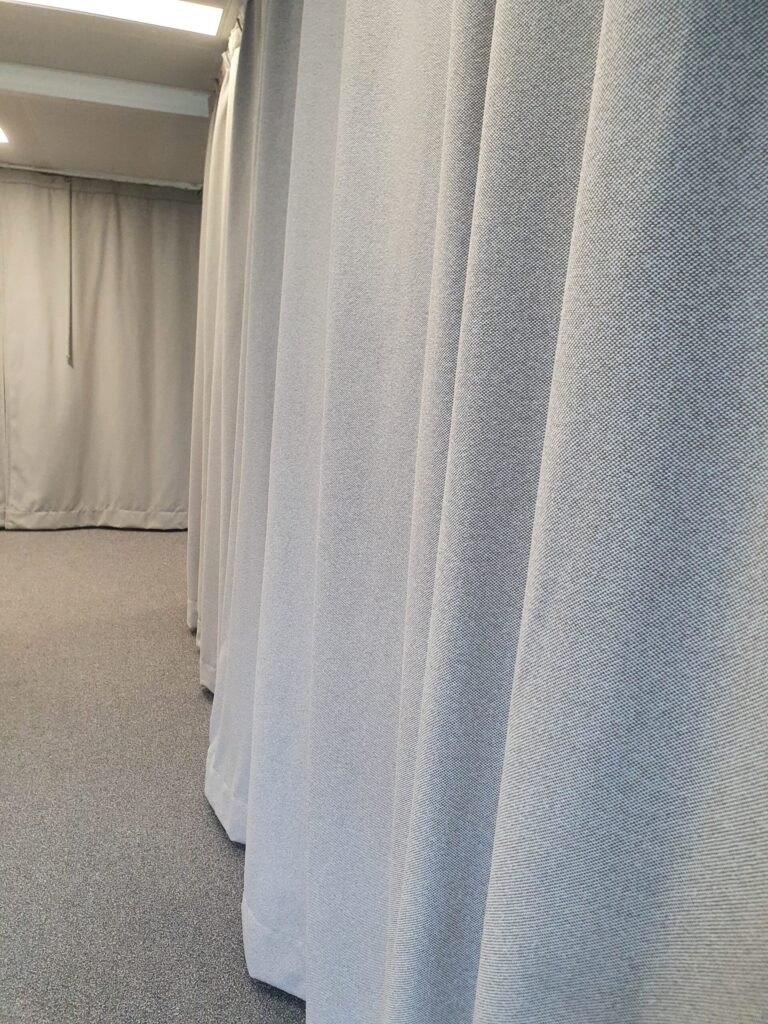
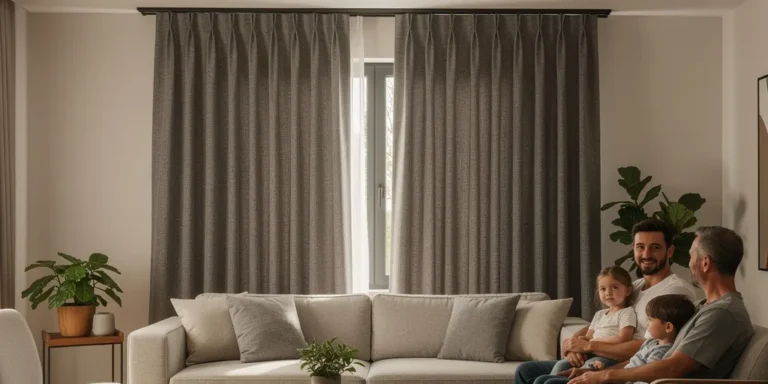
Textiles play an unexpected role in noise reduction. A good, thick curtain hung behind a window or glass door can instantly transform the acoustics of an office. Shag rugs, meanwhile, absorb footfall and impact noise while making the space feel cozier. Adding velvet or foam cushions to chairs may seem trivial, but this detail has a definite impact on perceived acoustic comfort. By opting for vibrant colors or geometric patterns, these accessories even become decorative assets in their own right.
In my previous open-plan office, I hung heavy curtains behind the glass partitions and laid down cozy rugs on the floor. Suddenly, the background noise faded away, and conversations became more relaxed: my colleagues were amazed by the unexpected silence. Even our meetings became much more productive.
Bookcases, movable partitions, and potted plants
Furnishing your space with open bookshelves filled with books or file cabinets acts as a natural barrier against sound transmission. Movable partitions, on the other hand, allow you to temporarily divide certain areas, creating flexible quiet zones that can be adapted to any meeting or busy period. You can’t overlook the power of houseplants: not only do they purify the air, but their leaves and soil absorb and diffuse some of the noise. A row of ficus plants sometimes works better than a thick wall —and no one will complain!
“Noise doesn’t just add up—it amplifies: every distracting conversation costs your team twice as much time.” – National Institute for Research and Safety

Tips for interior design and space organization
The best locations for workstations
Far from the coffee machine and high-traffic areas, strategically placed workstations are far less prone to interruptions. Positioning desks with their backs to noisy areas reduces direct exposure to sound waves. Also, be sure to avoid lining up multiple workstations in a straight line; instead, opt for “spike” or zigzag layouts that naturally disperse voices and limit the spread of noise. It’s amazing how simply rearranging furniture can make all the difference: it completely changes the flow of sound and creates a calmer atmosphere.
Best practices for reducing workplace conflicts
A healthy open-plan office relies on following a few simple rules. Keep conversations brief, in designated areas, and use written messages for non-urgent requests. If a call is likely to be long or sensitive, head to a meeting room or a quiet corner. Don’t forget to remind the team to wear headphones when listening to music or attending webinars; this courtesy, combined with the other practices mentioned, quickly lowers the overall noise level. Finally, keep a few golden rules in mind to defuse conflicts related to noise—the quality of the atmosphere depends on everyone’s cooperation.
List of the benefits of modular acoustic systems
- improved concentration: a noticeable reduction in distractions and an easier time staying focused;
- creation of dedicated spaces (nooks, alcoves): everyone can find an area suited to their tasks;
- flexibility to meet the team’s needs: adjust the layout as projects and staffing levels change;
- reduced stress and employee turnover: a calm work environment fosters engagement and retention;
- Flexibility and adaptability of the layout: change the atmosphere without moving or investing in major renovations.
Comparaison de solutions d’isolation phonique à poser soi-même
Criteria for selecting appropriate acoustic comfort in the office
Choosing the solution that best suits your needs requires evaluating several criteria: actual effectiveness (measured in decibels reduced), ease of installation, price, as well as visual impact and scalability. Opt for acoustic foam if you want to quickly soundproof a wall; thick carpeting or curtains if your floor or openings let in too much sound; and movable partitions if you value flexibility. Be careful, however: entry-level products are often less effective against low frequencies. For lasting results, invest in certified products that have been tested in setups similar to yours.
Product type: foam, mats, acoustic curtains, movable partitions
Each product has its own unique features. Acoustic foam, which is lightweight and easy to handle, can be installed almost anywhere and absorbs high frequencies and reverberations. A thick carpet, on the other hand, primarily dampens impact noise and serves as a beautiful decorative element. Acoustic curtains, which are lined and weighted, effectively block sound traveling through lightweight walls or large glass surfaces. Finally, movable partitions—often made of laminated panels—allow you to reconfigure the space daily and temporarily isolate a group or an individual. The choice will depend on your environment, your aesthetic constraints, and the type of noise disturbance you need to address.
Easy to install
Keeping things simple is definitely possible! Opt for ready-to-install solutions: self-adhesive foam panels, roll-out mats, curtains on extendable rods, or movable partitions on casters. They save you time, are budget-friendly, and eliminate the need to hire a professional. Be sure to measure carefully and plan the exact location before installation—it’s better to plan ahead than to have to start all over! Also consider movable solutions that are easy to remove when rearranging the office layout.
Estimated cost
There is a wide range of prices on the market: textile accessories can be had for just a few dozen euros, while more elaborate designer panels can sometimes cost hundreds of euros each. Keep in mind that acoustic performance often depends on the number and total surface area of the installed elements. Feel free to combine small touches (cushions, rugs) with larger investments (partitions or high-performance panels) to balance your expenses.
Relative efficiency (sound insulation measured in dB)
Did you know? A simple thick rug or a well-tensioned acoustic curtain is enough to reduce noise by 10 to 20 decibels—which makes a world of difference in a small office! If noise is a major issue, combining several solutions can amplify the effects and create a remarkably comfortable environment. Always consult the technical data sheets and look for products with values tested under real-world conditions.
Plutôt que de s’accommoder d’un bruit de fond permanent ou d’envisager de déménager, pourquoi ne pas redessiner l’ambiance sonore de votre bureau sur-mesure, à votre image et selon vos besoins ? L’isolation phonique intelligente n’est plus réservée aux architectes ou aux budgets colossaux : aujourd’hui, chaque collaborateur peut devenir l’acteur principal du confort acoustique collectif. Et vous, prêt à enclencher cette petite révolution silencieuse pour booster l’énergie de votre équipe ?