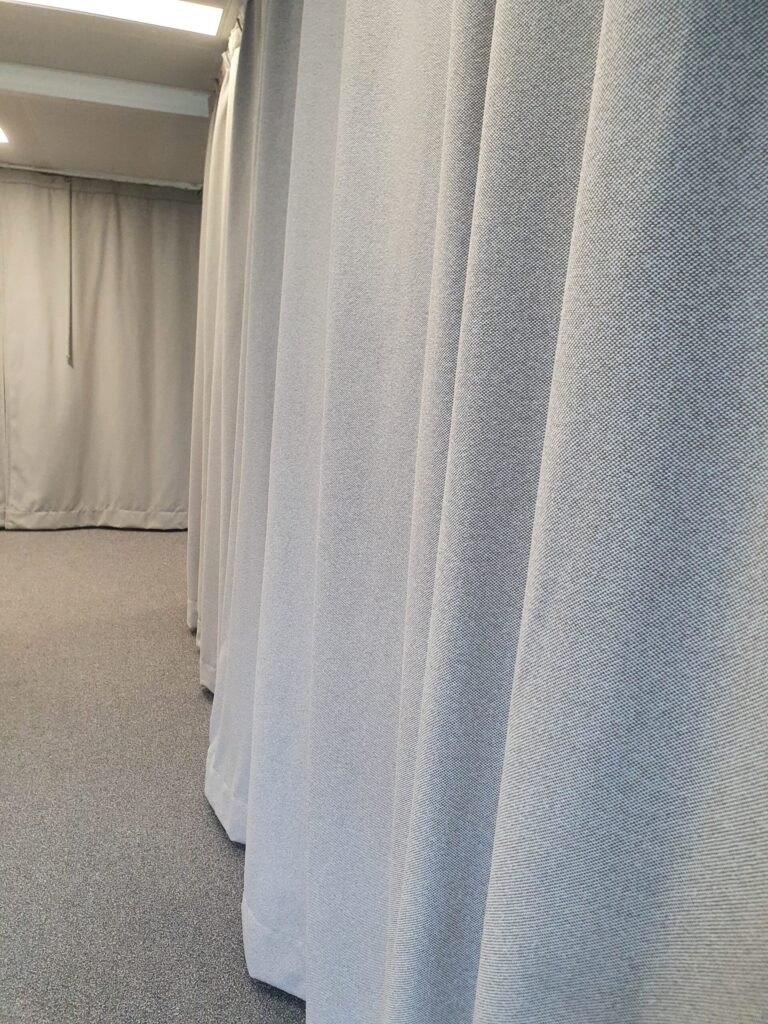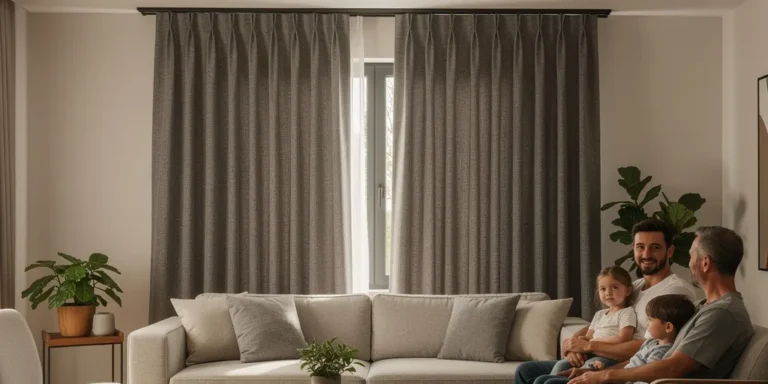

L’esthétique rime toujours avec l’expérience client, surtout dans l’hôtellerie et la restauration. Et vous, est-ce que ça vous arrive de trouver qu’un simple détail déco suffit à installer une vraie atmosphère, apaisante ou plus vibrante ? Nous, on en est convaincus. C’est pourquoi nous attachons une grande importance à chaque choix, même le plus simple en apparence. Vous vous demandez jusqu’où un mauvais ajustement peut nuire à une ambiance ? Eh bien, ça se joue parfois à quelques centimètres près. Vous devez donc dénicher le meilleur produit comme un rideau occultant sur mesure.
So, there’s no room for chance: harmony is something you build. We bet every detail matters to you , too, right? When it comes to welcoming guests, surprising them, and keeping them coming back… we know that it all comes down to visual cohesion, comfort, and the feeling of a space that reflects who you are.
Before we grab the tape measure, what should we think about together?
After all, how do you dress a window? Have you ever walked into a place and thought to yourself, “Wow, they’ve really thought of everything”? We often have that reaction, especially when the ambiance is so well-curated. So, how do you want to bring the overall style to life in your home? Softness and subtlety for a cozy bedroom? Graphic modernity in a dining room?
It’s all about asking ourselves the right questions: what are we looking for? Privacy, seclusion? We never make a choice without giving it some thought behind the scenes. For you, functionality is a key factor, isn’t it? We know that well, and we prioritize it—always to ensure not only comfort but also the overall harmony of the space.
Don't overlook these questions before you get started:
- How do you measure the width of curtains?
Mesurez la largeur de votre tringle, puis multipliez-la par 1,5 à 2 selon le type de tissu et l’effet de pli souhaité. La largeur des rideaux doit dépasser celle de la fenêtre pour un rendu élégant, surtout si vous optez pour un rideau occultant ou un voilage blanc.
- What is the ideal height for curtains?
The ideal height depends on the distance between the rod and the floor. For a more elegant look, let them just graze the floor, especially if the fabric is thick. Add 3 cm if you like a crisp hem or prefer a clean line with taut panels.
- How do I choose the right size for my curtains?
Determine the length of the curtain by measuring from the top of the rod to the floor. For the width, multiply the width of the rod based on the look you want to achieve. Take into account the type of fabric, the material, the interior space, and the aesthetic of your home.
- What width curtain rod should I use?
Votre tringle à rideaux doit dépasser la largeur de la fenêtre d’au moins 20 cm de chaque côté pour laisser passer la lumière. Pensez aussi au poids du tissu : un rideau occultant ou thermique nécessitera un support solide et une barre robuste.
- How do you hang grommet curtains?
Slide them directly onto the rod, without hooks or clips. The measured height starts at the top of the grommet, not at the edge of the fabric. Be sure to maintain the correct distance between the top of the grommet and the floor for a perfect drape and a clean, straight look.
- What fabrics should you choose for curtains?
En coton, polyester ou lin blanc, chaque tissu joue un rôle : le polyester est facile d’entretien, le lin apporte une texture naturelle, et le coton reste une valeur sûre. Pour un rideau thermique ou occultant, optez pour une matière lourde à fort pouvoir isolant.
- How can you create an attractive look with curtains?
Play with length, drape, color, and texture. Wide, well-proportioned curtains made from high-quality fabrics like linen or white sheers add a bold decorative touch. Coordinate the weave, finish, and style with your linens for a harmonious interior.
Cotton Silence Pro : un rideau occultant sur mesure pensé dans les moindres détails
Chez Cotton Silence Pro, chaque rideau occultant est conçu pour offrir une solution fonctionnelle, élégante et acoustique, adaptée à votre espace de vie. De la tringle au sol, chaque mesure compte : on détermine la hauteur idéale, la largeur de votre tringle, la distance entre le mur et le rideau, pour obtenir un tombé parfait. Le tissu (polyester, coton, lin), la longueur, le type de tête, qu’il s’agisse d’œillets, de plis ou de panneaux, sont soigneusement sélectionnés selon vos besoins.
Thanks to their custom dimensions, our curtains play a key role in blocking light, reducing noise by up to 31.4 dB, and creating a warm interior décor, even in rooms with high ceilings. And yes, a simple white sheer curtain isn’t always enough…
Chez Cotton Silence Pro, l’occultation se conjugue avec performance, prix juste et design.
And how do we view our openings?
We’d like to give you a heads-up: without a thorough analysis of the existing space, it’s impossible to get it right. You’d be surprised how often we’ve seen windows that seem to be “left out” of a cohesive design. In your spaces, where does the eye naturally go?
We analyze everything: the height, the width, even the space left on the right and left, and that famous gap under the crown molding or a few centimeters above the floor. Everyone has their own habits, but by working together, we benefit from planning ahead—there’s nothing worse than an unsightly panel right at floor level or, conversely, a “too short” look that breaks up the line. We adjust, we check; it’s quite an undertaking… but so rewarding when you see the result!
Shall we talk about the choice of materials?
Ah, the debate over fabrics—it’s a hot topic at our meetings, and sometimes in your discussions too, isn’t it? We’re always wondering: Will the drape be fluid? Will the room have a subdued atmosphere? We also think about the weight, the density, and the mood we want to create. Imagine Marie, the manager of an elegant country hotel, who shared:“I hesitated for a long time between different fabrics, and when I touched it, I knew this was the one. The result is perfect, and our guests love it!” Does that ring a bell? For us, it makes us want to keep refining our selection even further.
What are the practical steps for accurate measurement?
Avant de sortir quoi que ce soit, petit rituel chez Cotton Silence Pro : tout le matériel est vérifié. Qui n’a jamais galéré avec un outil qui fausse la prise ? Un centimètre fatigué, une échelle branlante… On préfère éviter, croyez-nous ! Vous aussi ? Chez Cotton Silence Pro, chaque projet débute par une révision du matériel : fiabilité = sérénité. Et puis, un petit conseil transmis de pro à pro : on nettoie, on range, on garde tout à portée – les galères en moins, le plaisir en plus !
Un souvenir marquant ? Claire, qui travaille avec Cotton Silence Pro sur plusieurs hôtels, nous a raconté : « Deux fois la même fenêtre, deux résultats différents ! J’ai compris que mon centimètre n’était plus droit. Depuis ce jour, je vérifie toujours tout avant de commencer, et franchement, je dors mieux les veilles d’inauguration ! » Vous aussi, vous avez des anecdotes du genre ?
What steps should you follow to make sure you don't forget anything?
La routine Cotton Silence Pro : mesurer, vérifier, ajuster. Il y a ceux qui aiment doubler les prises, d’autres qui photographient tout ; chez Cotton Silence Pro, on penche pour la rigueur et le partage d’expérience. Vous, vous êtes plutôt “toujours tout contrôler” ou “se fier à son instinct” ? Tant mieux, il y a des astuces pour tous :
- We always take a second measurement, just in case.
- Don't forget: check the thickness of the fabric you want.
- Before cutting: let’s visualize the final result together.
- A straightedge is our best tool for getting everything lined up.
Are you smiling? We remember an installation where everything was perfect… until we realized that one of us hadn’t used the same height reference as the other. We’ve been there, and that’s how we learn!

What standards are used in the hotel and restaurant industry?
Have you ever wondered: is there really such a thing as an “ideal model” for bedrooms or common areas? Over time, we’ve noticed that there are some common trends, but nothing beats tailoring the design to your specific situation.
| Room type | Standard width | Standard height |
|---|---|---|
| Single room | 140 cm | 220 cm |
| Double Room | 160 cm | 240 cm |
| Continued | 180 cm | 260 cm |
At home, do you tend to stick to the norm, or do you like to think outside the box?
And in dining areas, what practices should be prioritized?
It’s a fact: every room has its own little quirks—and, sometimes, its own demands. We love these little tweaks that make all the difference! In large living rooms, where sharing takes center stage, we aim for practical, easy-to-use finishes. In cozy corners, we adapt, always to foster a warm and welcoming atmosphere. And you—do you prefer a friendly, open vibe or an intimate one?
| Room type | Standard width | Standard height |
|---|---|---|
| Banquet Hall | 200 cm | 300 cm |
| Private room | 160 cm | 240 cm |
| Common room | 140 cm | 220 cm |
Do you see where you stand? We like to adapt to your preferences, while always respecting the atmosphere of the venue and the experience you want to create.
Custom-made or ready-to-install: how can we make the right decision together?
We often hear this question: should you go for a custom design or stick with a classic model? As we know, customization has a big impact on the final result, but it requires more attention—and sometimes a slightly larger budget (you’ve noticed that yourself, haven’t you?). So let’s talk about it and think through your priorities together. Do you prioritize uniqueness, even if it means waiting? Or do you prefer a pragmatic, immediate solution? Both approaches have their merits… and the end result is what matters most to you.
How can I place an order without stressing out?
Our approach? Direct communication, expectations laid out in black and white, priorities set. The more we discuss things upfront, the fewer surprises there are at delivery. Here’s a tip from an expert:“When everything is clear—even the reverse schedule—we save a ton of time and keep the team on the same page!” Is that your experience too?
We never compromise on meeting deadlines, especially when the facility needs to open right on schedule. Setting a timeline and listing your requirements really helps put everyone’s mind at ease: we see this in action every day, and we always have a Plan B if needed.
Creating a cohesive look with your new decor: how can you achieve this in your home?
What makes a project truly successful is often the ability to stay true to the essence of the space. Do you love trends? Or do you prefer to go for a timeless look? We like to blend current trends with timeless elements: it avoids that “déjà vu” feeling and gives the whole space a sense of cohesion, year after year. Colors, materials, light: everything influences one another and tells a story. For us, it’s these details that keep our clients coming back.
Little tips for coordinating table linens with other tableware—does that sound familiar?
Do you find yourself mixing and matching cushions, accessories, and floor materials? So do we! We make sure everything works together, that no single element clashes with the overall look. A restaurant owner recently told us:“Consulting your advice right from the start when choosing the furnishings helped unify the entire space. The effect on my staff and on customers was immediate.”It makes you want to coordinate everything, doesn’t it? We never hold back!
Our FAQ on curtain sizes
What is the standard size for curtains?
The standard height of a curtain is often around 250 cm, but it depends on the distance between the curtain rod and the floor. For width, we recommend a measurement 1.5 to 2 times that of the rod, depending on the fabric (cotton, polyester, linen) and the desired decorative effect. A well-chosen standard curtain serves both aesthetic and functional purposes. It should cover the space, add an elegant touch, and filter the light without hanging too low.
Do the curtains have to touch the floor?
Cela dépend du style et du type de rideau. Un voilage léger peut frôler le sol pour un effet aérien, tandis qu’un rideau occultant plus lourd peut légèrement le dépasser pour bloquer la lumière. On mesure la hauteur entre le haut de la tringle et le bas souhaité (parfois à 1 cm du sol pour un tombé net). La finition, la matière et l’effet déco désiré influencent directement ce choix. Un ourlet bien fait assurera une belle ligne.
How do you calculate the size of a curtain?
To accurately calculate the size of a curtain, start by measuring the height from the top of the rod to the floor (or the desired bottom edge). Next, determine the total width by multiplying the width of your rod by 1.5 or 2, depending on the drape and fabric (sheer, cotton, polyester). Consider the type of hem (eyelets, pleats), the decor style, and the area to be covered. A guide chart can help you adjust the measurements to your specific needs.
What is the right length for curtains?
La bonne longueur dépend de la hauteur sous plafond, du type de tringle et du style voulu. Pour une finition élégante, on mesure la distance entre la tringle et le sol, en ajoutant ou retirant quelques centimètres selon l’effet : rideau au ras du sol, cassant légèrement ou tombant généreusement. Le tissu, la matière, la fonction (thermique, déco, occultant), tout entre en compte. Une prise de mesure précise reste la clé pour obtenir un résultat harmonieux et fonctionnel.
What is the ideal curtain width for a 60-cm window?
Pour une fenêtre de 60 cm, on recommande une largeur totale de rideaux entre 90 cm et 120 cm. Cela permet de jouer sur les plis et la matière (voilage blanc, tissu épais ou rideau occultant) pour un rendu esthétique. La largeur des rideaux est directement liée à celle de la tringle. Pensez à mesurer précisément et à adapter selon le modèle (store, panneaux, rideaux à œillets). Le choix du tissu influence aussi l’effet visuel et la fonctionnalité.
What is a curtain cut?
La taille en rideau désigne les dimensions précises du produit : hauteur et largeur. Elle est essentielle pour une bonne confection et une pose réussie. La hauteur dépend de la distance entre la tringle et le sol, et la largeur du tissu correspond généralement à 1,5 ou 2 fois la largeur de la tringle. Selon le type de rideau (voilage, occultant, thermique), le modèle et la matière (lin, coton, polyester), la taille joue un rôle clé dans l’effet déco recherché.