
Well-appointed studio
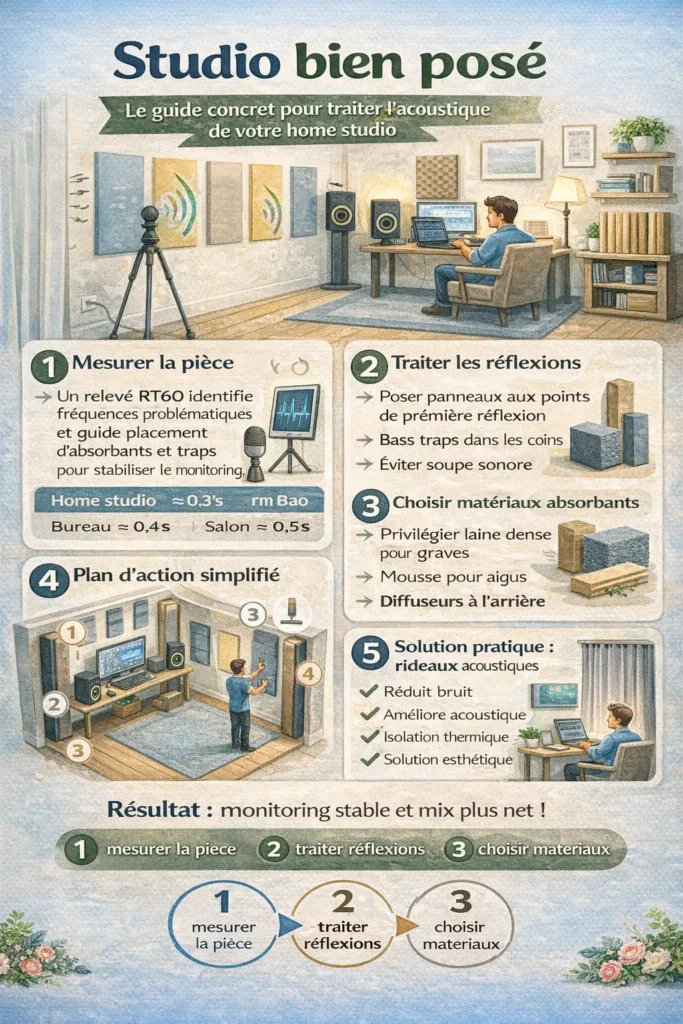
- Measuring the room: An RT60 analysis identifies problematic frequencies and guides the placement of absorbers and traps to stabilize the monitoring.
- Treating reflections: Install panels at the primary reflection points and bass traps in the corners to prevent sound buildup and preserve the soundstage.
- Choose materials: opt for dense wool for low frequencies, foam for high frequencies, and add diffusers at the back to maintain the mix’s natural sound.
La lampe allumée révèle des enceintes face à un mur nu et des câbles qui racontent des nuits de mix. Un mauvais placement des enceintes transforme une piste propre en soupe sonore le lendemain. Vous ressentez que la pièce joue contre votre oreille et que la qualité finale fluctue selon le jour. Ce texte pose un parcours concret pour mesurer la pièce et traiter les problèmes sans extravagance. Le but reste d’obtenir un monitoring fiable pour travailler la musique sereinement grâce à une isolation phonique bureau.
A step-by-step guide to treating the acoustics of a home studio and achieving reliable mixes
The general recommendation starts with measuring the room and identifying the RT60 and primary reflections. A simple survey is all it takes to determine where to place absorbers and traps. You should prioritize panels at reflection points before adding diffusion to retain sound energy. This approach prevents the room from sounding too dry and preserves the natural character of the mix.
Initial thoughts must be set aside.
The principles of absorption, diffusion, and isolation explained simply for a home studio
There’s a simple rule of thumb to help distinguish between absorption, diffusion, and insulation. As you know, absorption reduces reverberation, while diffusion scatters sound waves to maintain spatial depth. This technical terminology will help guide your purchases and testing. A sound wave loses energy.
Choosing materials and practical solutions for a DIY or professional budget
The first step is to install panels on the side walls, ceiling, and at the first reflection points. An effective choice combines thick mineral wool for bass frequencies and foam for high frequencies. You adjust the thickness based on the target frequency to absorb midrange and bass without dampening the treble. This process begins in the corners with bass traps before adding diffusers to the back of the room.
| Material | Typical absorption | Recommended thickness | Estimated cost | Main advantage |
|---|---|---|---|---|
| Polyurethane foam | Low to moderate (αw ~0.2–0.6) | 5–10 cm | Bottom | Simple and cost-effective for high frequencies |
| Mineral wool / fiberglass | Medium to high (αw ~0.6–0.95) | 10–15 cm | Medium | Very effective for midrange and bass frequencies |
| Rigid wood or MDF panel with sound absorber | Medium (variable) | 6–12 cm | Moderate to high | Stylish and durable, it combines absorption and diffusion |
| Multi-layer acoustic curtain | High-bandwidth (αw ~0.7–0.9) | 2–4 mm thick multi-layer fabric | Medium | Attractive, easy to install, versatile for windows and walls |
A brief action plan outlines the steps to take before purchasing materials.
- The RT60 measurement identifies problematic frequencies.
- The listening position determines where to place the sound-absorbing panels.
- A trap in each corner reduces low-frequency resonance.
- Installing it on the ceiling corrects the initial vertical reflections.
- Rear speakers restore the natural soundstage.
Compléter le traitement avec un Rideau Phonique Professionnel
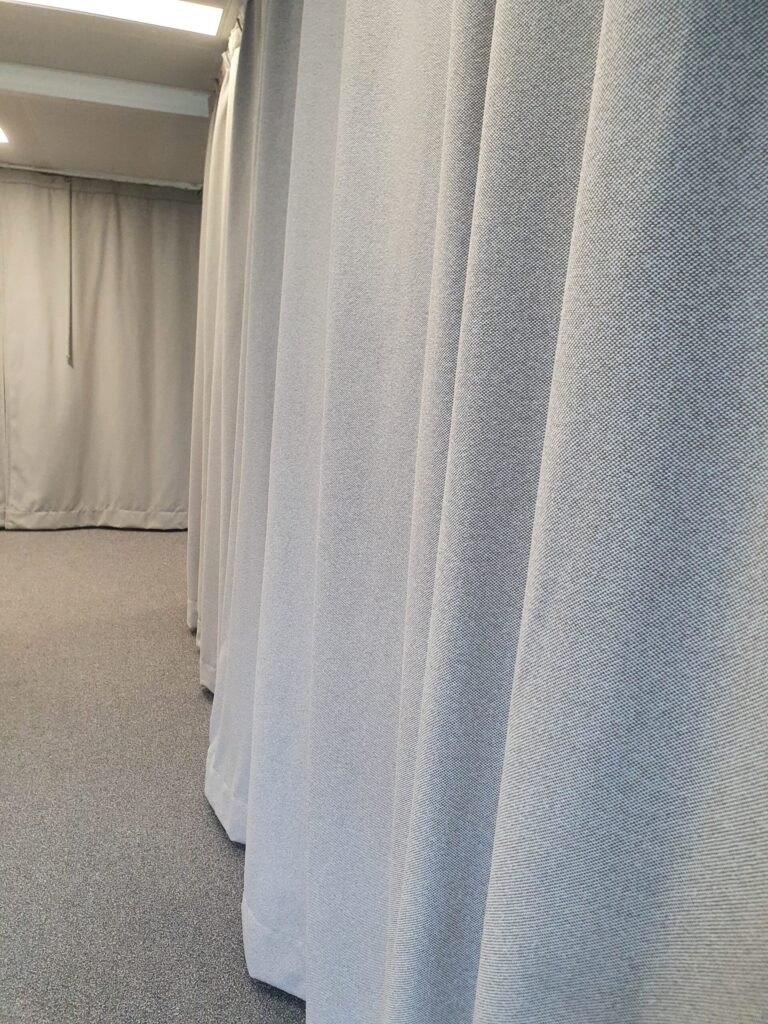
La proposition Cotton Silence combine performance acoustique et finition soignée pour les espaces qui ne veulent pas ressembler à une cabine. Un système multicouche permet une absorption et une isolation mesurables tout en restant léger pour la pose. Vous trouvez des références et des exemples de mesures pour valider les choix avant commande. Ce positionnement explique la montée en puissance de cette offre sur le marché professionnel et domestique. En complément du traitement des murs, un rideau phonique professionnel peut aider à limiter la fuite sonore vers l’extérieur du studio.
Vous obtenez un produit qui peut remplacer une cloison légère pour certaines configurations grâce au rideau phonique étudié pour réduire la transmission sonore. Ce service inclut la confection artisanale et la pose professionnelle adaptée à la taille de la pièce. La livraison se planifie selon vos contraintes pour limiter le temps de travaux et garantir un montage propre. Un suivi technique aide à régler la positionnement des rails et des panneaux pour optimiser le résultat.
Le catalogue Cotton Silence et performances techniques comparées aux alternatives
The best advice is to compare sound absorption coefficients, insulation performance, and fire resistance before making a purchase. Request measurements before and after installation to see the actual effect on the sound spectrum. This approach helps you avoid surprises regarding price and actual performance. The following table compares products and benefits to help you make your decision.
| Product | Primary function | Acoustic performance | Design advantage |
|---|---|---|---|
| Multi-layer acoustic curtain | Absorption and insulation | Up to -31.4 dB depending on the installation | Over 70 colors, handcrafted |
| Rideau occultant acoustique | Light blocking and sound reduction | Very effective on vocals and ambient sounds | Dual thermal and acoustic function |
| Installation Service | Turnkey installation | Performance Optimization | Custom installation and warranty |
Installation Process, Customer Service, and Timelines for a Hassle-Free Installation
The process begins with a precise measurement and a discussion of your acoustic needs. A detailed quote specifies the delivery and installation schedules to minimize disruptions. You’ll benefit from professional installation that optimizes the positioning of the rails and panels for the best performance. This service includes a final inspection and usage instructions.
This client profile includes architects, engineers responsible for spaces, and discerning individuals seeking to combine aesthetics with acoustic performance. We frequently receive requests for custom solutions for offices, restaurants, studios, and listening rooms with specific acoustic specifications. You prioritize safety, sustainability, and material traceability for long-lasting installations. This combination of needs explains our comprehensive offering, which includes integrated installation and technical support.
The next step is to measure the RT60 and compare the before and after results to validate your choices. Consulting with a professional will help you decide between a gradual DIY approach and a turnkey solution. Keep in mind that treating the room will profoundly change your relationship with music and mixing.